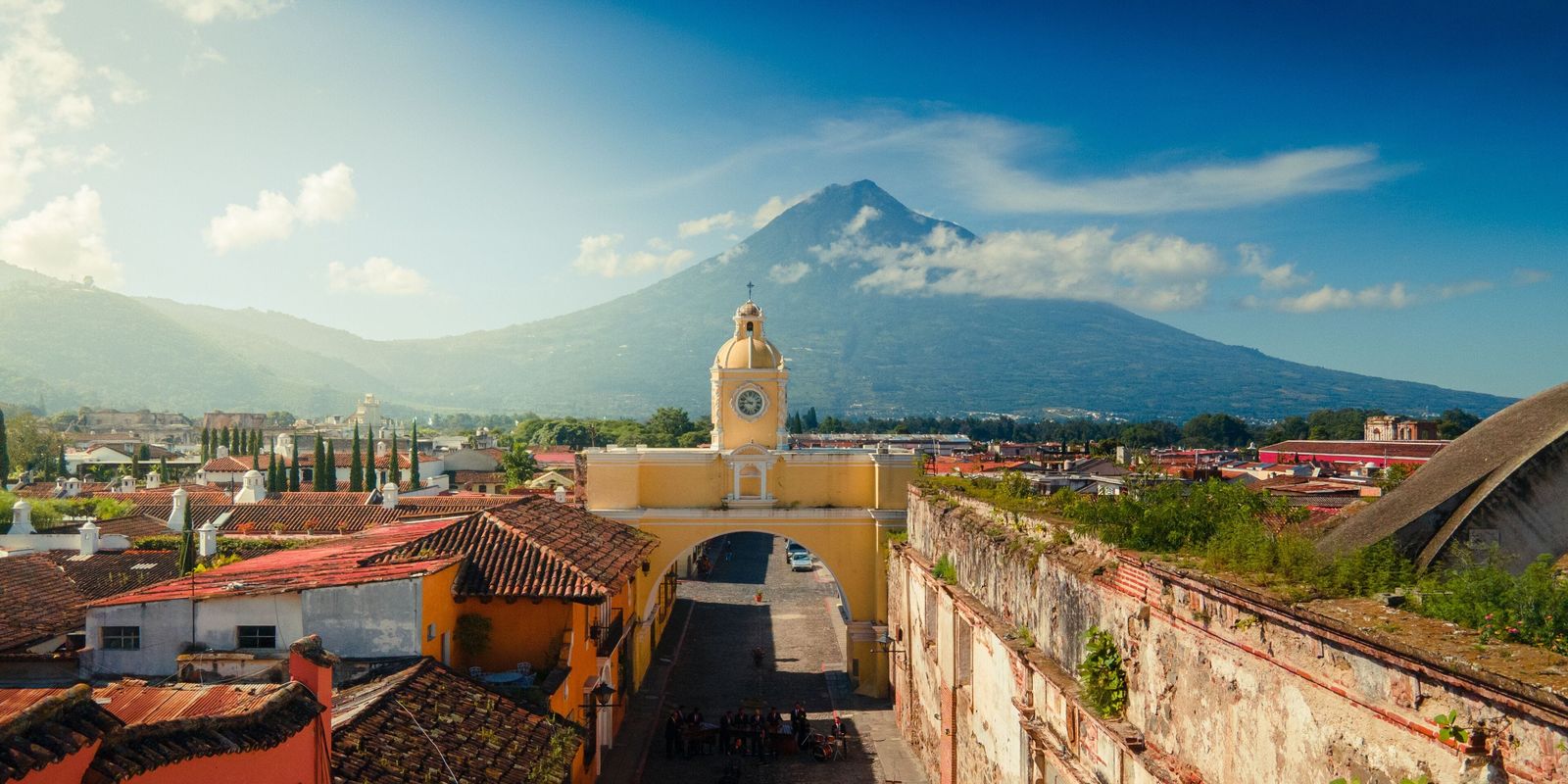
Counting down
Friday 6 November – Sunday 15 November 2026.
Coming up
Flights
Arrive Friday 6 November, as close to 2:00 p.m. as you reasonably can. Our ground transport to the Pacific coast is built around that window.
Depart Sunday 15 November, after 1:00 p.m. We spend the last night at the Marriott in Guatemala City and head to the airport around 11:00 a.m.
Travelling to Singapore? Your group leaves a day earlier, on Saturday 14 November, going straight to the airport after dropping the rest of us in Antigua.
Schedules and fares move around, so do confirm the details with the airline before you buy.
Travelling from Singapore or Taiwan? We'd love to look over your proposed itinerary before you book — especially if the schedule means arriving on 5 November.
Send your booked itinerary to
Ashlyn Ahrendsen — ashlyn.ahrendsen@usanainc.com
Include: full legal name, airline, flight numbers, arrival date and time, departure date and time, and confirmation number if requested.
See your confirmed flights
Once Ashlyn has your itinerary, it goes into a private page. Sign in with your email to see it — only you (and Ashlyn) can. Needs an internet connection.
Trip cost
$2,400 per person, plus your own airfare.
The fee covers
Lodging throughout the scheduled itinerary · breakfast, lunch and dinner · in-country ground transportation · service projects and related activities · planned excursions and cultural experiences · support from the USANA Foundation and trip partners.
The payment link comes by email rather than through this app.
Where we sleep
A mix of hotel and Airbnb-style properties, in San Andrés and in Antigua, plus beachside accommodation on the Pacific coast for the first two nights.
Wherever possible we eat in the homes of the families we support, or at a local café run by one of the mothers in the community — so the trip's food budget stays in the community.
Final lodging and rooming assignments are still to come. Exact property names and addresses aren't in this app yet.
Who's coming
Do have a look at your own name here and check it matches your passport. If something is missing, misspelled or under the wrong country, just let Ashlyn know before reservations are finalised.
Foundation & trip leadership
Brian Paul, President, USANA Foundation · USANA Executive (TBA) · Tobie Spears, Be Humanitarian · Darrin Spears, Be Humanitarian
United States
Michelle Benedict · Pete Benedict · Charley Benedict
Singapore
Fabien Ghys · Helen Song
Taiwan
Kung Ching-Chun · Sung Li-Chen · Chiu Yu Wen
A note on the itinerary
Think of the days in this app as a working framework rather than a fixed schedule. Things will keep shifting between now and November as lodging, transport, service projects, family schedules and excursions come together.
So much of this trip depends on local families, community leaders and small partners rather than commercial tour operators, and that is rather the point. It does mean the timing is looser than you might be used to. When something moves, it usually just means we are following the community's lead — or the weather's.
All we ask
Come with patience, flexibility and an open mind. Our team and our partners will take good care of you, and the plan will find its shape as we go.
Before we fly
Tick things off as you do them. Your progress is saved on this device only — nobody else sees it, and it survives app updates.
Works offline. Pronunciation is written the way an English speaker would sound it out — stressed syllable in CAPITALS.
A little context before we arrive
San Andrés Semetabaj is a Kaqchikel Maya town of around 12,000 people. Spanish and Kaqchikel are both spoken daily; some older residents and many women speak limited Spanish. We're guests here, and a little context goes a long way.
The photography section just below is the most important thing in this app, and it is worth a few minutes of your time before we go.
Photography
The short version
Ask before you photograph someone, and check with a parent before photographing a child. Some people will say yes and some will say no, and both answers are completely fine. A warm "of course, no problem" is the whole skill.
Why we ask first
Traditional dress carries real meaning. Traje típico tells you someone's family and home community. It can look striking to a visitor, but it isn't a costume — it's what someone wore to work this morning. Photographing it uninvited turns a person into scenery.
Cameras carry more weight here than they do at home. Some Maya families feel a photograph takes something of the person in it, and in the highlands there's a long-standing wariness of strangers with cameras that has good historical reasons behind it.
A few small things
- For photos of children, it's the parent you ask. Much easier when one of the Be Humanitarian team is nearby to help.
- Say hello first. A little conversation, and an offer to send the picture along, usually gets you a yes — and a much nicer photograph.
- Get close enough to ask. Photographing from across the square is really just a way of not asking.
- Drones are best left at home.
- Hands off heads and hair, children included. The head is treated as sacred here, so a friendly ruffle lands differently than it would at home.
Gifts, money, and the market
Bringing gifts
If you'd like to bring something for the families, the easiest thing is to hand it to the Be Humanitarian team rather than directly to a child. That's already how school supplies, water filters, stoves and Garden Towers reach people — local partners know which families need what, so everything lands where it's most useful and nobody gets missed.
Tobie and the team will know what's most wanted this trip, so it's worth asking her before you shop.
Bargaining at the market
Haggling is part of the fun and it's expected. Open a little below the asking price, meet somewhere in the middle, and stop when you're both pleased with it.
Worth remembering that a lot of what you'll see took days to make by hand, so there's a point where a few extra quetzales matter rather more to the maker than to us. Produce at a working market is priced to feed a family rather than to be bargained over.
Bring small notes — Q20s, Q10s, Q5s and Q1 coins. Vendors often can't break a Q200.
Tipping
- RestaurantsAround 10% at mid-range and up. Check the bill first — some include servicio. Round up at casual places.
- GuidesRoughly US$3–5 per person per day (about Q23–38).
- DriversAround US$2–3, more for a full day of private driving.
- PortersQ10–20 per bag.
- HousekeepingQ20–40 a night, left daily — staff rotate, so daily beats a lump sum.
- CurrencyQuetzales are preferred. US dollars only if the bills are pristine.
No Guatemalan government or tourism-board source publishes tipping norms — these are travel-industry conventions, directionally right rather than official. A pooled group tip for a shared driver and guide is usually cleaner than nine separate handovers.
On being a volunteer
People are sometimes sceptical about short-term volunteering, and not without reason — a week of visitors can end up being more about the visitors than the place. It's a fair question, and this trip has good answers to it.
What makes this one different
- The resources arrive before we do. Garden Towers for the area are sponsored ahead of the visit, so the community gains from the trip whether or not everything goes to plan.
- One community, thirteen years. Be Humanitarian has been working in this village since 2013. That's long enough for the relationships to be real ones.
- Local partners decide who receives what. The Foundation works through community leaders who know which families a Garden Tower will help most.
- The gifts keep giving. The Foundation's figure is that one tower holds 100+ regionally native plants and can provide around 1,100 meals a year, harvested and replanted for years. A walipini, by the same logic, keeps working long after we've gone home.
- Local income. The mesh sacks for the towers are sewn at a partner centre in Guatemala, paying wages to local women.
- Families stay together. The whole model is built around helping parents provide, so children stay at home rather than in institutions.
And a few things to hold lightly
- On the build site, follow the local team's lead. They've done this many times over. The most useful thing we can be is willing hands.
- Being invited into someone's home is a privilege. Be a guest — greet, sit, talk, accept what's offered. The camera can stay outside.
- Tell the story generously afterwards. It's easy for these trips to become a story about us. The better version keeps the community and the programme at the centre of it.
Two lines worth carrying
From Be Humanitarian: "Local families understand their community better than any visitor." And: "There is value in service on both ends."
出發前的一點背景
聖安德烈斯塞梅塔巴赫是一個約有12,000人的卡克奇克爾瑪雅小鎮。當地日常同時使用西班牙語和卡克奇克爾語;一些年長者和不少女性的西班牙語並不流利。我們是客人,稍微瞭解一點背景會很有幫助。
下面關於拍照的部分是整個應用裡最重要的內容,出發前值得花幾分鐘讀一讀。
拍照
一句話版本
拍任何人之前先問一聲;拍孩子之前,先徵得家長同意。有人會答應,也有人會拒絕,兩種回答都完全沒問題。一句輕鬆溫和的「沒關係」,就是全部的訣竅。
為什麼要先問
傳統服飾是有意義的。Traje típico能看出一個人的家族和家鄉。它對訪客來說也許很好看,但那不是戲服——那是別人今天早上穿去幹活的衣服。未經允許拍下來,等於把一個人當成了風景。
在這裡,相機比在家鄉分量更重。一些瑪雅家庭認為照片會帶走人身上的某些東西;在高地,人們對拿著相機的陌生人一向有所保留,這背後有其歷史原因。
幾件小事
- 要拍孩子,問的是家長。如果 Be Humanitarian 的夥伴在旁邊幫忙,會容易得多。
- 先打聲招呼。聊上幾句,再說願意把照片發給對方,通常都會得到同意——照片也會拍得更好。
- 走近一點再問。站在廣場另一頭拍,其實就是不想開口問。
- 無人機就別帶了。
- 不要摸別人的頭和頭髮,孩子也一樣。頭在當地被視為神聖的部位,一個在家鄉看來親切的摸頭動作,在這裡感覺很不一樣。
禮物、金錢與市集
帶禮物
如果你想給當地家庭帶點東西,最簡單的做法是交給 Be Humanitarian 的團隊,而不是直接給孩子。學習用品、濾水器、爐灶和種植塔本來就是這樣送到大家手裡的——當地夥伴清楚哪戶人家最需要什麼,東西才能用在刀刃上,也不會有人被漏掉。
Tobie 和團隊最清楚這次最需要什麼,採購前不妨先問問她。
在市集講價
講價是逛市集的樂趣之一,攤主也預期你會講。可以從略低於開價開始,在中間某處成交,雙方都滿意就好。
不過要記得,你看到的很多東西是手工做的,往往要花上好幾天;到了某個程度,那幾個格查爾對做的人來說,比對我們重要得多。另外,日常市集裡的農產品是拿來養家的,不像紀念品那樣適合講價。
請帶小面額紙幣——20、10、5格查爾和1格查爾硬幣。攤主常常找不開200的大鈔。
小費
- 餐廳中檔以上約10%。先看賬單——有些已含服務費。小店隨手湊個整數即可。
- 導覽每人每天約3–5美元(約23–38格查爾)。
- 司機約2–3美元;整天的專車服務可以多給一些。
- 行李員每件行李10–20格查爾。
- 客房清潔每晚20–40格查爾,每天留下——清潔人員會輪班,每天給比退房時一次給更好。
- 幣種最好用格查爾。美元只在鈔票嶄新的情況下適用。
瓜地馬拉官方和旅遊局並未公佈小費標準,以上是業界慣例,方向上可參考,但並非官方規定。如果司機和導覽是全團共用,湊一份團體小費通常比九個人各給一次更妥當。
關於做志願者這件事
有人對短期志願服務持保留態度,這並非沒有道理——一週的到訪,有時反而更像是關於訪客自己的故事。這是個公允的問題,而這趟行程有很好的回答。
這一趟為什麼不一樣
- 資源比我們先到。當地的種植塔在出發前就已由參與者贊助,所以無論行程是否順利,社區都已經受益。
- 同一個社區,十三年。Be Humanitarian 自2013年起就在這個村子工作。時間夠長,關係才是真的。
- 由當地夥伴決定誰受助。基金會透過熟悉當地的社區領袖來判斷哪些家庭最需要一座種植塔。
- 留下的東西會一直生長。據基金會的資料,一座種植塔可種植100多株本地作物,每年約可提供1,100份餐食,並可年復一年地採收與補種。同理,地下溫室在我們離開後也會繼續運作。
- 為當地創造收入。種植塔的網袋由瓜地馬拉的合作縫紉中心製作,為當地女性帶來工資。
- 讓家庭在一起。整套模式的出發點,是幫助父母有能力養育孩子,讓孩子留在家裡,而不是被送進機構。
另外幾件放在心上的事
- 在工地上,跟著當地團隊走。他們做過很多次了。我們最有用的角色,是一雙肯幹活的手。
- 被請進別人家裡是一種榮幸。做個好客人——打招呼、坐下、聊天、接受主人的好意。相機可以留在門外。
- 回去之後,講故事時請把主角讓出來。這類行程很容易變成關於我們自己的故事;更好的版本,是把社區和這個計畫放在中心。
兩句值得記住的話
來自 Be Humanitarian:「當地家庭比任何訪客都更懂自己的社區。」以及:「服務這件事,兩邊都有收穫。」
In an emergency
Call 1500 — ASISTUR / PROATUR tourist assistance. 24/7, staffed in English and Spanish, free, and it forwards to the nearest ambulance, fire or police. The US Embassy tells American citizens to use it. The red SOS button at the bottom right of this app dials it.
911 is not the emergency number in Guatemala. It's 110 for police, 122 for ambulance and fire, 1500 for tourists.
Find a number fast
Before you go: the clinic visit
CDC's position on Guatemala
- Hepatitis A and typhoid — recommended for visitors. Typhoid vaccine is offered to all travellers, especially those going to smaller towns and rural areas.
- Measles / MMR — Guatemala is on CDC's global measles notice. So are Singapore, Taiwan and the US. Check your status now; it takes weeks.
- Routine immunisations, flu and COVID — be up to date. Expect COVID vaccine availability in Guatemala to be limited or nonexistent.
- Rabies — worth a real conversation, not a shrug. Guatemala is one of the few countries in the Americas still reporting dog rabies, and rabies immune globulin supply can be uncertain there. Pre-exposure vaccination removes the need for it. We're spending six days in a rural highland village.
Malaria: almost certainly not needed
CDC recommends prophylaxis only for Alta Verapaz, Baja Verapaz, Escuintla, Izabal and Petén. It names Antigua, Guatemala City and Lake Atitlán as not risk areas. Monterrico sits in Santa Rosa, which isn't on the list either. Mosquito avoidance, not pills.
One thing to nail down: confirm which department the 6–8 November coastal lodging is actually in. If any night lands in Escuintla rather than Santa Rosa, that's the only malaria indication on the whole trip.
Guatemala requires proof of yellow fever vaccination from travellers arriving from a yellow-fever country, or with a layover longer than 12 hours in one. The US, Singapore and Taiwan are all fine. The trap is a long Panama City (PTY) connection, and Colombia and Venezuela routings. Once your tickets are booked, check your specific itinerary.
Bring your full course of any regular medication from home. Counterfeit medication is a documented problem in Guatemala.
Insurance
US health insurance is not accepted in Guatemala. Medicare and Medicaid don't cover you abroad. Hospitals typically require payment before treatment, don't offer payment plans, and may not discharge you until you've paid in full.
The State Department strongly recommends supplemental medical evacuation coverage. That matters especially here: six of our nine nights are at Lake Atitlán, three hours over mountain roads from the hospitals that can handle serious trauma — and road blockades can make that longer.
Singapore and Taiwan travellers: buy commercial travel medical and evacuation cover, and confirm it actually covers Central America and repatriation home. Some Asia-issued policies exclude the region.
Water and food
Tap water is not potable anywhere in Guatemala
Including the capital. Bottled and purified water is standard and widely available; most homes and guesthouses keep a purified garrafón. Use it for brushing your teeth too, and keep your mouth closed in the shower.
The rules that actually matter
- No ice unless you know it's from safe water. Ask for drinks sin hielo. Alcohol does not kill what's in the ice.
- No raw leafy greens or salads unless washed and disinfected or cooked.
- Fruit you peel yourself is the safe kind. Skip pre-cut fruit cups.
- No unpasteurised dairy, especially soft or fresh cheeses. No raw or undercooked meat or fish.
- Hot, fully cooked, served hot is the safest thing on any table. A tortilla straight off the comal is a very different risk from a room-temperature buffet.
- Don't swallow lake water. Giardia.
- Soap and water beats hand sanitiser, especially when your hands are dirty from the build site.
Two Guatemala-specific ones
Cyclospora. Guatemala is one of only four countries CDC names globally for this. It incubates 2–14 days and does not respond to the usual travellers' diarrhoea antibiotics. If you get diarrhoea in the two weeks after this trip, tell your doctor you were in Guatemala, by name.
Cysticercosis. Contaminated raw vegetables can carry T. solium eggs, which cause tissue and brain cysts. Cases occur in every department. This is the real reason behind "no raw vegetables."
Expect somebody to get sick
Travellers' diarrhoea hits 30–70% of visitors over two weeks. CDC does not recommend preventive antibiotics for healthy travellers. Carry azithromycin as a standby (it's the preferred treatment for fever or bloody diarrhoea, and works as a single dose), plus loperamide and oral rehydration salts. Loperamide alone is not appropriate for bloody diarrhoea or diarrhoea with fever — that needs a doctor.
Altitude, cold and sun
- MonterricoSea level. 85–90°F / 29–32°C days, 72°F / 22°C nights, humid.
- Panajachel~1,562 m / 5,125 ft. Days 74°F / 23°C, nights 52–57°F / 11–14°C.
- San Andrés~1,945 m / 6,381 ft. Days ~72°F / 22°C, nights ~50°F / 10°C.
- Antigua~1,530 m / 5,020 ft. Days 75–78°F / 24–26°C, nights 55–60°F / 13–16°C.
The underpacking trap
On 8 November we go from a 32°C beach afternoon to a 10°C mountain night in one day — a 22°C swing. San Andrés sits about 380 m above Panajachel, so lakeshore forecasts under-predict it. Rural highland housing is unheated block or adobe: indoor temperature tracks outdoor. Bring a fleece or insulated jacket, a warm hat, warm socks, and something warm to sleep in. Every trip, people don't, and every trip they regret it.
Altitude sickness is unlikely. CDC's threshold is a sleeping altitude of 2,450 m / 8,000 ft, and every place we sleep is below it — San Andrés is about 500 m under. But a sea-level-to-1,945 m jump in a day is a real physiological step: expect some people to get a headache, sleep badly the first night, and get short of breath on the hill. Take 8 and 9 November easy, hydrate hard, go light on alcohol the first night.
Acatenango (camp around 3,600 m) and the other big volcanoes near Antigua go well over the AMS threshold. If anyone adds one on, that needs its own medical discussion — and State Department guidance is never hike a volcano or trail without a qualified local guide, because of both robbery and rescue.
Cool air, extreme sun
UV index in the highlands in November runs 10–12 — "extreme". Burn time can be about ten minutes. People get badly burned at Atitlán precisely because it doesn't feel hot. SPF 50 minimum, reapply every two hours, wide-brim hat, sunglasses, long sleeves on build days.
Mosquitoes
Dengue, chikungunya and Zika all circulate in Guatemala. Guatemala reported record dengue in 2024. Risk is highest on the coast (Santa Rosa reports cases annually) and lowest at Lake Atitlán's altitude; Antigua is a rising-risk area.
There is no vaccine and no prophylaxis. Prevention is the whole toolkit: effective repellent, long sleeves and long pants, screens or air conditioning where you sleep. The Aedes mosquitoes that carry these bite in the daytime — repellent is a morning discipline, not just an evening one.
If anyone is pregnant or trying to become pregnant, Zika needs a separate conversation with a doctor before booking.
As of 25 August 2026 there was no Guatemala-specific CDC travel health notice at any level. Worth re-checking a week out — November is the tail of the rainy season, historically a strong dengue window.
Water safety
Monterrico is not a swimming beach
Guatemala's Pacific black-sand beaches are known for unpredictable rip currents, heavy shore break and steep drop-offs. Multiple drownings happen every year and strong swimmers are not exempt. There are no lifeguards and, as the State Department puts it, first responders cannot reach remote areas.
Treat it as a beach to walk on and watch the sunset from. If you do go in: waist deep, never alone, never after drinking. Caught in a rip? Swim parallel to the shore to get out of it, then angle back in. Don't fight it straight toward the beach.
The black sand also gets genuinely painful underfoot in the afternoon. Bring flip-flops.
Lanchas on Lake Atitlán
- Cross in the morning. The Xocomil wind builds from midday and peaks between 2 and 4 p.m., and it can capsize a small boat. Before 1 p.m. is the working rule; before 10 a.m. is smoothest.
- Public lanchas stop running around 4:30–5 p.m. In November assume the earlier end.
- Check there are life jackets aboard for everyone, every time.
- Don't board a visibly overloaded boat. Wait for the next one. There is no meaningful regulation here.
Our lake day is Thursday 12 November — San Juan La Laguna, then Panajachel.
Atitlán is a deep volcanic caldera — cold water, sharp drop-offs, and a history of cyanobacteria blooms. We found no authoritative current guidance. Ask locally about water quality before anyone swims.
Small things that bite
- Scorpions are more common around Lake Atitlán than most of Guatemala, and the striped bark scorpion is highly venomous. Shake out shoes and bedding during the six-day stay.
- Wear footwear on the beach and don't lie directly on the sand. Cutaneous larva migrans comes from skin contact with warm sand and soil.
- Every dog bite is a possible rabies exposure. Wash it immediately with soap and water for 15 minutes and get medical attention the same day.
- Don't wade in flood water — leptospirosis, especially after heavy rain.
Getting in and out
The form everybody forgets
Guatemala requires an electronic Declaración Jurada Regional de Viajero (DJRV) — a combined immigration and customs declaration — on entry AND on exit. It's free and takes about four minutes. Do both before you travel, and screenshot the QR code; you'll have no data when you land, and you must show it to customs after you collect your bags.
The 15 November exit form is the one groups forget, and it's the one that will make you miss an afternoon flight. Start from the SAT portal rather than an old bookmarked link.
- PassportAim for valid through ~15 May 2027 (six months past return) with 2 blank pages. The State Department says "valid at entry"; the airline check-in system is stricter, and that's the one that stops you boarding.
- VisaNot required for US or Singapore passports — 90 days. Taiwan is almost certainly the same, but see the note below.
- Entry stampCheck you actually got one before leaving the immigration hall. No stamp means a fine and delays on the way out.
- Carry IDLeave the passport in the safe; carry a colour photocopy including the stamp page. Also make two photocopies before you leave home — one stays with someone you trust, one travels separately from the passport.
- CashNo limit on what you bring, but US$10,000 or more must be declared, both ways.
- Departure taxUS$30, normally in your ticket price. Confirm with your airline — if it isn't, that's about Q230 in cash on 15 November.
Firearms — check your pockets
Firearms and ammunition are absolutely prohibited, including spent shells and casings. Penalties run to 4–8 years' imprisonment. Physically empty and check every daypack and jacket pocket before you fly. This catches hunters and range shooters who forgot a stray casing.
Guatemala and Taiwan have full diplomatic relations and Taiwan is near-certainly visa-exempt for 90 days — but we could not confirm it at a Guatemalan government source. Get written confirmation from a Guatemalan consulate before booking is final.
Money on the ground
The currency is the quetzal. Roughly Q7.6 = US$1 as of August 2026, so Q100 ≈ $13. It's been in a narrow band for years. Ignore older sources that say 8 to 1.
Why the packet says "clean, like-new bills"
It's real, and the reason is a chain-of-acceptance problem, not fussiness. Banks and casas de cambio refuse torn, taped, stained or marked US bills because nobody further down the line will accept them either. Ask your bank for new notes a couple of weeks out. Bring a mix: $1s and $5s for tips, $20s to exchange.
Cash, cards and ATMs
- Assume San Andrés Semetabaj is cash only. Cards work in Antigua and Guatemala City, mostly work in Panajachel, and don't work at markets, in tuk-tuks, on lanchas or in the smaller villages.
- Panajachel is your last reliable ATM before the lake villages — BI and Banrural on Calle Santander. There are two ATMs in the GUA baggage hall, which is a comparatively secure first withdrawal.
- The State Department says plainly: avoid public and street-facing ATMs. Use machines inside bank branches or malls, in daylight.
- Most machines cap around Q2,000–3,000 per withdrawal with a Q20–45 fee. Always choose to be charged in quetzales, never dollars — that conversion costs 3–7%.
- Tell your bank your dates, and carry two cards from two different banks, stored separately. A single frozen card is the most common money problem on trips like this.
- Break big notes early. A Q200 is useless at a market stall.
Roughly what to carry
Meals and lodging are prepaid, so this is a small number. Around Q100–150 a day for drinks, snacks, tuk-tuks, lanchas and market restrooms (carry Q1 coins). Add Q400–700 for tips and whatever you want for souvenirs. Q2,000–3,000 (about $260–400) on hand, topped up in Panajachel and Antigua, covers most people comfortably.
Roads, blockades and staying safe
Guatemala is currently at State Department Level 3: Reconsider Travel (dated March 2026), for crime and terrorism. Our entire route avoids all four Level 4 "Do Not Travel" areas — San Marcos, Huehuetenango, Zone 18 of Guatemala City, and Villa Nueva. Sololá, Antigua, the Santa Rosa coast and the rest of Guatemala City are all places US government employees are permitted to go, with tourist police present.
The rules that matter
- Don't be on a highway outside Guatemala City after dark. Sunset in November is around 5:30 p.m. and Guatemala doesn't do daylight saving.
- Never a "chicken bus," never a white taxi. Private shuttles, hotel taxis, Uber, or the INGUAT-approved "SAFE" stand at the airport.
- Try not to use your phone in public. Phones, headphones and smartwatches are specifically targeted.
- Don't use public Wi-Fi.
- No hiking without a qualified local guide.
Blockades are likely at some point
Highway blockades over political and fuel-price issues happen regularly — nationwide ones hit Sacatepéquez (Antigua) in July 2026, and Sololá is one of the country's most organised blockade departments. They're usually peaceful but immovable, lasting hours to a day.
If we hit one: don't try to drive through or around it. Wait, or turn back and reroute. Defer entirely to the driver. Check road status on asistur.gt every transfer morning, and leave three hours of margin on 15 November.
A US Embassy security alert dated 7 July 2026 said travel to Santiago Atitlán remains prohibited for US government personnel, after riots in which vehicles and buildings were burned and people were wounded by gunfire. It's a common lancha day-trip stop across the water from Panajachel. Whether that still stands in November is unknown — check gt.usembassy.gov/category/alert/ about a week out.
Two routing requests worth making now
Guatemalan tourist authorities advise avoiding the Godinez bypass and the Cocales–San Lucas Tolimán road for the lake, in favour of the CA-1 Pan American Highway via Los Encuentros. Cocales is the shortest route up from the Pacific coast, so it's exactly what a driver might default to on 8 November. Ask the operator for CA-1.
Register before you go
US travellers: STEP at step.state.gov. Singapore travellers: MFA eRegister at eregister.mfa.gov.sg. Both are free and both mean someone knows you're there.
Phones and data
Buy an eSIM before you leave home and activate on landing. Airport SIM plans are poor value, and physical SIMs in Guatemala require passport registration while eSIMs don't.
Two networks: Tigo and Claro. Claro is faster in cities; Tigo is the safer bet at the lake, where terrain matters. A multi-network eSIM covers both. Make sure at least two people in the group have working data at all times.
Download offline maps for Sololá, Sacatepéquez and Santa Rosa before you fly.
Panajachel and the main lake towns have reasonable LTE. We found no reliable data on coverage in San Andrés Semetabaj or Monterrico. Assume patchy in both and don't build any plan around having signal.
Pharmacies
Guatemala has no formal after-hours pharmacy rota. Chains run delivery call centres instead: Galeno 1702, Cruz Verde 1728, Batres 1763, Meykos +502 2422 2422.
Most pharmacies in Antigua close by 9–10 p.m., and we could not verify a 24-hour walk-in pharmacy in either Antigua or Panajachel. Overnight, go to a hospital emergency pharmacy instead — Vitalmed or Hermano Pedro in Antigua, San Francisco or PanaMed in Panajachel.
Many US-prescription drugs are over the counter here, but antibiotics have required a prescription since 2019. Bring original prescriptions or a doctor's letter for anything chronic.
What to re-check before we fly
- CDC travel notices for Guatemala — there were none as of 25 Aug 2026, but these appear in days.
- Dengue activity — the highest-priority recheck, given the November rainy-season tail.
- US Embassy alerts, especially the Santiago Atitlán prohibition.
- Blockades, on asistur.gt, the week before and each transfer morning.
- Volcanic activity (Fuego is near Antigua) at insivumeh.gob.gt.
- Tropical storms — hurricane season runs through late November.
- The DJRV form URL still works.
出發前:看旅遊門診
美國 CDC 對瓜地馬拉的建議
- 甲型肝炎與傷寒——建議所有訪客接種。傷寒疫苗建議所有旅客接種,前往小城鎮和鄉村地區者尤其如此。
- 麻疹(MMR)——瓜地馬拉在 CDC 的全球麻疹提示名單上,新加坡、台灣和美國同樣在列。請現在就確認接種情況,這需要數週時間。
- 常規疫苗、流感與新冠——請保持最新。在瓜地馬拉,新冠疫苗的可及性很有限甚至沒有。
- 狂犬病——值得認真討論,而不是一帶而過。瓜地馬拉是美洲少數仍有犬類狂犬病報告的國家之一,而且狂犬病免疫球蛋白的供應並不穩定。我們將在高地鄉村停留六天。
瘧疾:幾乎可以確定不需要
CDC 僅建議前往上韋拉帕斯、下韋拉帕斯、埃斯昆特拉、伊薩瓦爾和佩滕這幾個省的旅客服用預防藥,並明確指出安提瓜、瓜地馬拉城和阿蒂特蘭湖不屬於瘧疾風險區。蒙特里科位於聖羅莎省,也不在名單上。做好防蚊即可,不需要吃藥。
只有一件事需要落實:確認11月6至8日海岸住宿究竟位於哪個省。如果有任何一晚落在埃斯昆特拉而非聖羅莎,那將是整趟行程中唯一需要考慮瘧疾預防的情況。
瓜地馬拉要求來自黃熱病疫區、或在疫區停留超過12小時的旅客出示黃熱病疫苗證明。美國、新加坡和台灣都不屬於疫區。真正需要留意的是在巴拿馬城(PTY)的長時間轉機,以及經哥倫比亞、委內瑞拉的航線。機票訂好後,請對照自己的具體行程再確認一次。
請從家裡帶足平時服用藥物的完整用量。當地假藥問題有據可查。
保險
美國的醫療保險在瓜地馬拉不被接受,Medicare 和 Medicaid 在境外也不適用。當地醫院通常要求先付款後治療,不提供分期,未付清費用前甚至可能不予辦理出院。
美國國務院強烈建議另行購買醫療轉運保險。這一點在這趟行程中尤其重要:我們有六個晚上住在阿蒂特蘭湖,距離能處理重傷的醫院有三小時山路,而道路封鎖還可能讓時間更長。
新加坡與台灣的旅客:請自行購買商業醫療與轉運保險,並確認保單確實涵蓋中美洲以及送返回國。部分亞洲地區出具的保單會排除該區域。
飲水與飲食
瓜地馬拉全國的自來水都不能直接飲用
首都也一樣。瓶裝水和淨化水隨處可得,多數住家和民宿都備有淨化水桶。刷牙也要用淨化水,洗澡時請閉緊嘴巴。
真正要緊的幾條
- 不要加冰,除非確定是安全水制的。點飲料時說 sin hielo。酒精殺不死冰塊裡的東西。
- 不吃生的綠葉菜和沙拉,除非經過清洗消毒或煮熟。
- 吃自己剝皮的水果才安全。切好的水果盒請跳過。
- 不吃未經巴氏消毒的乳製品,尤其是軟質鮮乳酪;也不吃生的或半熟的肉與魚。
- 熱的、徹底煮熟、趁熱端上桌的食物最安全。剛出爐的玉米餅和放涼的自助餐是兩回事。
- 不要吞入湖水。會有賈第蟲。
- 肥皂洗手比免洗洗手液更管用,工地回來手髒時尤其如此。
兩件瓜地馬拉特有的事
環孢子蟲。全球只有四個國家被 CDC 點名,瓜地馬拉是其中之一。潛伏期2–14天,而且常規的旅行者腹瀉抗生素對它無效。回國後兩週內若出現腹瀉,請明確告訴醫生你去過瓜地馬拉。
囊蟲病。受汙染的生蔬菜可能帶有豬帶絛蟲卵,會在組織和腦部形成囊腫,全國各省都有病例。這才是「不吃生菜」背後真正的原因。
總會有人腸胃不適
兩週內約有30–70%的旅客會出現腹瀉。CDC 不建議健康旅客預防性服用抗生素。可隨身攜帶口服補液鹽和止瀉藥;若出現發燒或血便,請就醫,不要自行處理。
海拔、寒冷與陽光
- 蒙特里科海平面。白天 29–32°C,夜間 22°C,溼度高。
- 帕納哈切爾海拔約 1,562米。白天 23°C,夜間 11–14°C。
- 聖安德烈斯海拔約 1,945米。白天約 22°C,夜間約 10°C。
- 安提瓜海拔約 1,530米。白天 24–26°C,夜間 13–16°C。
最容易漏帶的東西
11月8日這一天,我們會從32°C的海灘午後,進入10°C的山間夜晚——溫差達22度。聖安德烈斯比帕納哈切爾還高約380米,所以湖邊的天氣預報會低估這裡的寒冷。鄉村建築多為磚石或土坯,沒有暖氣,室內溫度基本等於室外。請帶抓絨衣或保暖外套、保暖帽、厚襪子,以及保暖的睡衣。每一趟都有人沒帶,每一趟都有人後悔。
高原反應的可能性不大。CDC 的門檻是睡在海拔2,450米以上,而我們所有住宿都低於這個高度,聖安德烈斯還低了約500米。不過一天之內從海平面上到1,945米確實是實實在在的變化:有些人會頭痛、第一晚睡不好、爬坡時氣短。11月8日和9日請放慢節奏,大量喝水,第一晚少喝酒。
空氣涼爽,紫外線卻極強
十一月高地的紫外線指數達 10–12,屬於「極強」,曬傷可能只需十分鐘。人們在阿蒂特蘭湖被曬傷,正是因為感覺不熱。請用 SPF 50 以上防曬,每兩小時補塗一次,戴寬簷帽和太陽鏡,工作日穿長袖。
蚊蟲
瓜地馬拉存在登革熱、基孔肯雅熱和寨卡病毒。2024年該國登革熱病例創下紀錄。海岸地區風險最高(聖羅莎省每年都有病例),阿蒂特蘭湖因海拔較高風險最低,安提瓜則是風險上升的地區。
這些疾病沒有疫苗,也沒有預防藥,全靠防護:有效的驅蚊液、長袖長褲,以及有紗窗或空調的住處。傳播這些疾病的伊蚊白天叮人——所以塗驅蚊液是早上的功課,不只是晚上。
如果有人懷孕或正在備孕,關於寨卡病毒需要在訂票前單獨諮詢醫生。
涉水安全
蒙特里科不是適合游泳的海灘
瓜地馬拉的太平洋黑沙灘以難以預測的離岸流、強勁的拍岸浪和陡峭的水下落差著稱。每年都有人溺水,泳技好也不例外。這裡沒有救生員;正如美國國務院所說,偏遠地區的急救人員根本趕不到。
把它當作散步和看日落的海灘就好。如果一定要下水:不超過腰深,不要獨自下水,喝過酒後不要下水。被離岸流帶走時,請順著海岸平行游脫離水流,再斜著游回岸邊,不要直接頂著水流往岸上游。
下午的黑沙灘也是真的燙腳,記得帶人字拖。
阿蒂特蘭湖上的小船
- 上午過湖。當地稱為 Xocomil 的風從中午開始增強,下午2至4點最強,足以掀翻小船。下午1點前是通行的原則,上午10點前最平穩。
- 公共船班約在下午4:30–5:00停開。十一月請按較早的時間估算。
- 每次上船前,確認船上有足夠的救生衣。
- 明顯超載的船不要上,等下一班。這裡沒有實質的監管。
我們的湖上行程是11月12日(週四)——聖胡安拉拉古納,之後前往帕納哈切爾。
阿蒂特蘭湖是一座深水火山口湖——水溫低、水下落差大,歷史上也出現過藍藻問題。我們沒有找到權威的現行指引。下水前請先向當地人打聽水質情況。
會咬人的小東西
- 阿蒂特蘭湖一帶的蠍子比瓜地馬拉多數地區更常見,條紋樹皮蠍毒性很強。在這裡的六天裡,穿鞋前抖一抖,睡前抖抖被褥。
- 在沙灘上請穿鞋,不要直接躺在沙子上。皮膚直接接觸溫熱的沙土可能感染皮膚幼蟲移行症。
- 任何犬類咬傷都要當作可能的狂犬病暴露。立即用肥皂和清水沖洗15分鐘,並當天就醫。
- 不要涉入積水——尤其大雨過後,有鉤端螺旋體病風險。
入境與出境
最容易被忘記的一張表
瓜地馬拉要求填寫電子版旅客申報表(DJRV)——一份合併的入境與海關申報,入境和出境都要填。免費,約四分鐘。請在出發前兩份都填好,並把二維碼截圖;落地時你不會有網路,而取完行李後必須向海關出示。
11月15日的出境那一份最常被團隊遺忘,也最容易讓人誤了下午的班機。請從 SAT 官網入口進入,不要用舊的書籤連結。
- 護照建議有效期至2027年5月15日左右(回程後六個月),並留有2頁空白。美國國務院說「入境時有效即可」,但真正會攔你的是航空公司的系統,它的標準更嚴。
- 簽證美國和新加坡護照免籤,可停留90天。台灣護照幾乎可以確定相同,但請見下方說明。
- 入境章離開入境大廳前請確認已蓋章。沒有入境章,出境時會被罰款並耽誤時間。
- 隨身證件護照放在保險箱,隨身帶一份彩色影印件(含蓋章頁)。出發前另做兩份影印件——一份留給家中信任的人,一份與護照分開攜帶。
- 現金攜帶金額沒有上限,但1萬美元及以上必須申報,進出都要。
- 離境稅30美元,通常已含在機票中。請向航空公司確認;如果沒有包含,11月15日需準備約230格查爾現金。
槍支彈藥——請檢查口袋
槍支和彈藥絕對禁止攜帶,包括用過的空彈殼,刑期可達4至8年。出發前請把每個揹包和外套口袋都翻一遍。這條最容易讓打獵或去過射擊場的人中招。
瓜地馬拉與台灣有正式邦交,台灣護照幾乎可以確定享有90天免籤——但我們無法從瓜地馬拉官方來源核實。請在最終訂票前向瓜地馬拉領事館取得書面確認。
當地用錢
當地貨幣是格查爾。2026年8月的匯率約為 1美元 ≈ 7.6格查爾,也就是 100格查爾 ≈ 13美元。這個匯率多年來相當穩定。請忽略那些說「1比8」的舊資料。
為什麼要帶「嶄新的鈔票」
這不是講究,而是流通問題。銀行和兌換點會拒收破損、貼過膠帶、有汙漬或塗寫的美元,因為下一手同樣不會收。請提前兩週向銀行要新鈔。面額搭配著帶:1元和5元用來給小費,20元用來兌換。
現金、刷卡與提款機
- 請假設聖安德烈斯塞梅塔巴赫只收現金。安提瓜和瓜地馬拉城可以刷卡,帕納哈切爾大致可以,但市集、嘟嘟車、小船和周邊村莊都不行。
- 帕納哈切爾是進入湖區村莊前最後一處可靠的提款點——Calle Santander 上有 BI 和 Banrural 的 ATM。GUA 機場行李提取區有兩臺 ATM,是相對安全的第一次取款地點。
- 美國國務院明確建議:避免使用街邊的公共 ATM。請在銀行營業廳或商場內、白天取款。
- 多數機器單次上限約2,000–3,000格查爾,手續費20–45格查爾。結算時一定選格查爾,不要選美元——那種換算會多收3–7%。
- 告知銀行出行日期,並帶兩家不同銀行的卡分開存放。卡被凍結是這類行程中最常見的麻煩。
- 儘早把大鈔換開。200格查爾在市集攤位基本用不出去。
大概要帶多少
餐食和住宿都已預付,所以數目不大。每天約 100–150格查爾用於飲料、零食、嘟嘟車、小船和市集廁所(記得帶1格查爾硬幣)。小費另備 400–700格查爾,紀念品視個人而定。手上有 2,000–3,000格查爾(約260–400美元),並在帕納哈切爾和安提瓜適時補充,對多數人來說綽綽有餘。
道路、封路與安全
瓜地馬拉目前屬於美國國務院三級:重新考慮前往(2026年3月釋出),理由是犯罪與恐怖主義。我們的整條路線都避開了全部四個四級「請勿前往」區域——聖馬科斯省、韋韋特南戈省、瓜地馬拉城18區和新鎮市。索洛拉、安提瓜、聖羅莎海岸以及瓜地馬拉城其餘地區,都是美國政府僱員獲准前往的地方,並有旅遊警察駐守。
真正重要的幾條
- 天黑後不要在瓜地馬拉城以外的公路上行駛。十一月日落約在下午5:30,且瓜地馬拉不實行夏令時。
- 絕對不要搭「雞公車」,也不要搭白色計程車。請用包車、酒店叫車、Uber,或機場 INGUAT 認證的 SAFE 車站。
- 儘量不要在公共場合掏手機。手機、耳機和智慧手錶是明確的盜竊目標。
- 不要連公共 Wi-Fi。
- 沒有合格當地嚮導時不要登山徒步。
路上遇到封路的可能性不小
因政治和油價引發的公路封鎖時常發生——2026年7月的全國性封鎖就波及了薩卡特佩克斯(安提瓜),而索洛拉是全國封鎖行動最有組織的省份之一。封鎖通常是和平的,但無法通行,可能持續數小時甚至一整天。
如果遇上:不要試圖衝過去或繞行。等待,或折返改道,完全聽從司機的判斷。每個轉場日的早上都在 asistur.gt 檢視路況,11月15日請留出三小時的餘裕。
美國大使館2026年7月7日的安全通告指出,聖地亞哥阿蒂特蘭仍禁止美國政府人員前往,此前當地騷亂中有車輛和建築被燒、有人中槍受傷。該地是帕納哈切爾對岸常見的乘船一日遊目的地。十一月是否仍然如此尚不清楚——請在出發前一週檢視 gt.usembassy.gov/category/alert/。
現在就值得向地接提出的兩個要求
瓜地馬拉旅遊部門建議前往湖區時避開 Godinez 繞道和 Cocales–San Lucas Tolimán 路段,改走經 Los Encuentros 的 CA-1 泛美公路。Cocales 是從太平洋海岸上山最短的路,也正是11月8日司機最可能預設選擇的路線。
出發前登記
美國旅客:在 step.state.gov 登記 STEP。新加坡旅客:在 eregister.mfa.gov.sg 登記 MFA eRegister。都是免費的,登記後官方會知道你人在當地。
手機與網路
出發前先買好 eSIM,落地後啟用。機場的 SIM 卡套餐價效比很差;而且在瓜地馬拉,實體 SIM 卡需要用護照實名登記,eSIM 則不用。
當地有兩家電信商:Tigo 和 Claro。城市裡 Claro 更快,但湖區 Tigo 更可靠,因為地形影響很大。支援雙網的 eSIM 最保險。請確保團隊中始終至少有兩個人有可用網路。
出發前請下載離線地圖:索洛拉、薩卡特佩克斯和聖羅莎。
帕納哈切爾和湖區主要城鎮有還不錯的 4G。但我們找不到關於聖安德烈斯塞梅塔巴赫和蒙特里科訊號的可靠資料。請假設兩地訊號斷斷續續,不要把任何計劃建立在有訊號的前提上。
藥房
瓜地馬拉沒有正式的藥房輪值制度,連鎖藥房改以送藥專線服務:Galeno 1702、Cruz Verde 1728、Batres 1763、Meykos +502 2422 2422。
安提瓜多數藥房晚上9–10點關門,而且我們無法確認安提瓜或帕納哈切爾有24小時營業的實體藥房。夜間請改去醫院的急診藥房——安提瓜的 Vitalmed 或 Hermano Pedro,帕納哈切爾的 San Francisco 或 PanaMed。
許多在美國需處方的藥物在當地可直接購買,但抗生素自2019年起需要處方。長期用藥請帶上原始處方或醫生證明。
出發前需要重新確認的事
- CDC 的旅行健康提示——截至2026年8月25日沒有針對瓜地馬拉的提示,但這類提示幾天內就可能出現。
- 登革熱疫情——最需要重新確認的一項,十一月正值雨季尾聲。
- 美國大使館通告,尤其是聖地亞哥阿蒂特蘭的禁令是否仍然有效。
- 道路封鎖——出發前一週及每個轉場日早上檢視 asistur.gt。
- 火山活動(富埃戈火山靠近安提瓜)——insivumeh.gob.gt。
- 熱帶風暴——颶風季持續到11月下旬。
- DJRV 表格連結是否仍然可用。
Packing
Saved on this device. You don't need to buy everything now — a refined list is still coming from the organisers.
The short version
Two days of beach heat, then six days at 1,945 m where the nights sit around 10°C in unheated buildings. Pack for both. The warm layer is the one people tend to leave at home and wish they hadn't.
Things we'll bring for you我們會為你準備的東西
Leave these at home — they'll be waiting for you:
- Your trip shirt — worn on work days, so you don't need to sacrifice your own.
- A water bottle — refilled from purified water wherever we are.
- A hat
- USANA product for the trip.
Everything else on the list below is yours to bring.
這幾樣不用帶,我們會幫你準備好:
- 隊服——工作日穿,不必犧牲自己的衣服。
- 水壺——沿途都可以裝淨化水。
- 帽子
- 行程期間的 USANA 產品。
下面清單上的其他東西,就要麻煩你自己準備了。
How this works — please read once
Photos and documents you add here are stored in this browser, on this phone, and nowhere else. They do not upload anywhere, the rest of the team can't see them, and Ashlyn can't see them. That's deliberate — it means a boarding pass or a passport copy stays private and works offline.
It also means this is not a backup. Clearing your browser data, deleting the home-screen app, or losing the phone loses these. Keep the originals in your own photos or email.
My flights
Your confirmed flights live on a private page you sign into with your email. Unlike the documents below, they're kept on a server — you'll need a connection, and only you (and Ashlyn) can see them.
My travel documents
Your flight confirmation, insurance card, vaccine record, passport copy — whatever you want to reach without signal.
Still don't put everything in here
Device storage is private, but phones get lost and unlocked. Passport numbers, medical histories and named allergy lists belong on a printed sheet the trip leads carry, not in an app.
To get your flight itinerary to the trip: email it to Ashlyn. Saving it here doesn't send it anywhere.
Photo wall
Your own trip photos, on your own phone, viewable offline.
Before you add anything
Everything on the Respect tab applies here. No photographs of children without a parent's explicit permission. No identifiable images of children posted anywhere afterwards. If Be Humanitarian or the Foundation has a media policy, theirs wins.
The best version of this wall is our own experience — the work, the volcanoes, the team, the food, the light at 6 a.m. on the water — rather than other people's lives as scenery.
Stored on this device only
No photos yet.
The group album
Storage on this device
Checking…
Your saved photos, documents and ticked checkboxes survive app updates — they're tied to the web address, not the version. Republishing the app never wipes them.